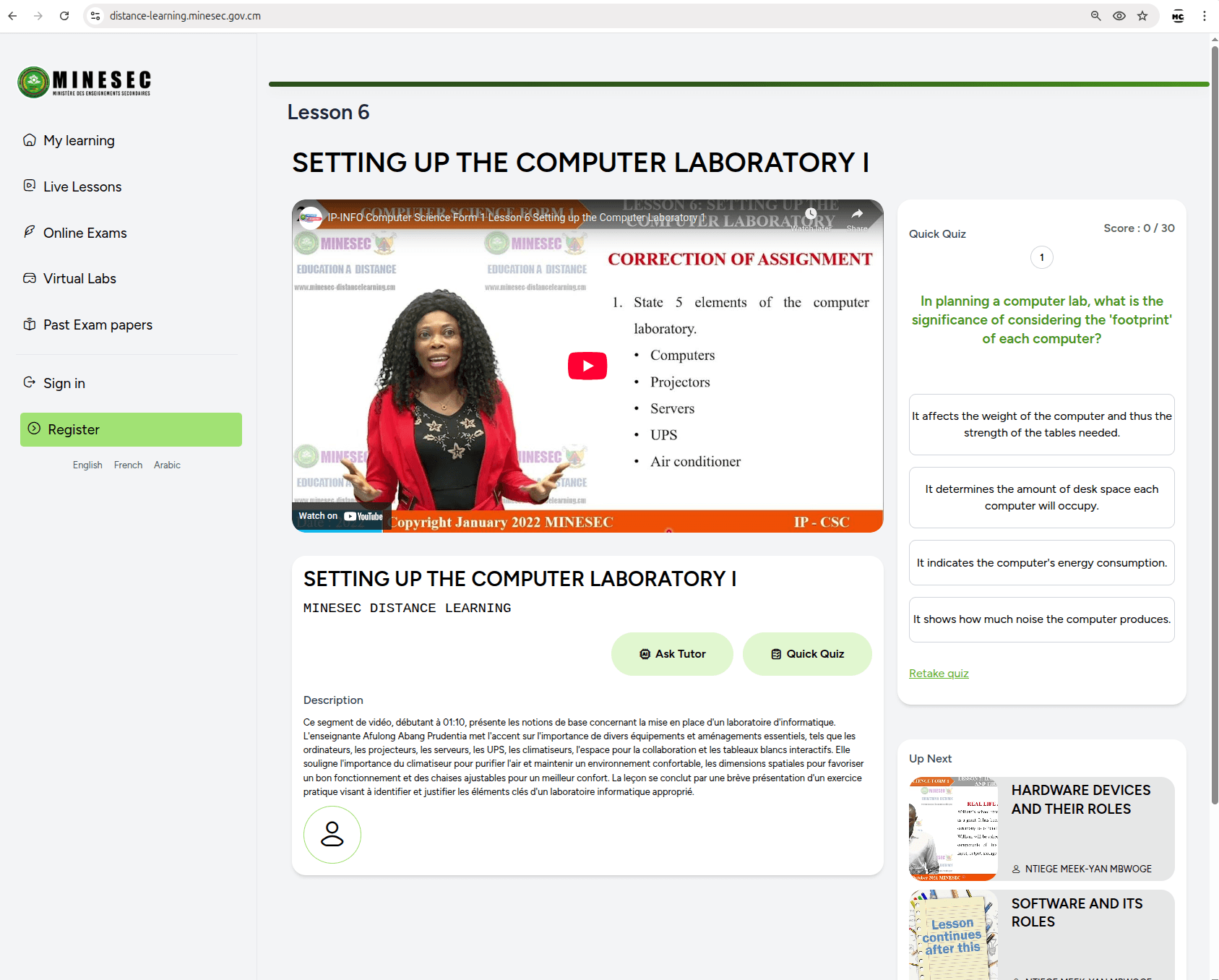
Case Study: How we built Cameroon’s National Distance Learning Platform
![Dashboard Screenshot Placeholder: Insert a high-quality screenshot of the new platform interface here]
The Challenge: Moving Beyond "Digital Filing Cabinets"
When the Ministry of Secondary Education (MINESEC) first digitized learning, the initial solution was functional but limited: a content library that simply hosted links to videos. While it provided access, it lacked the interactivity of a real classroom. Students could watch, but they couldn't ask questions, test themselves, or perform experiments.
The Ministry needed a Digital Campus, not just a digital library. They needed a system robust enough to handle national exam traffic, yet intelligent enough to personalize learning for every single student.
NDAHI was selected as the technical architect to build this next-generation ecosystem.
The Solution: An AI-First Educational Ecosystem
We didn't just redesign the interface; we re-engineered the pedagogy. The new platform, now live at distance-learning.minesec.gov.cm, introduces four groundbreaking features that bridge the gap between physical and digital schooling.
1. The AI Tutor: A Private Teacher for Every Student
In a crowded classroom, a student might be afraid to raise their hand. On our platform, help is instant. We integrated a Context-Aware AI Tutor trained on the specific lesson transcripts and presentation files used in recording the lessons.
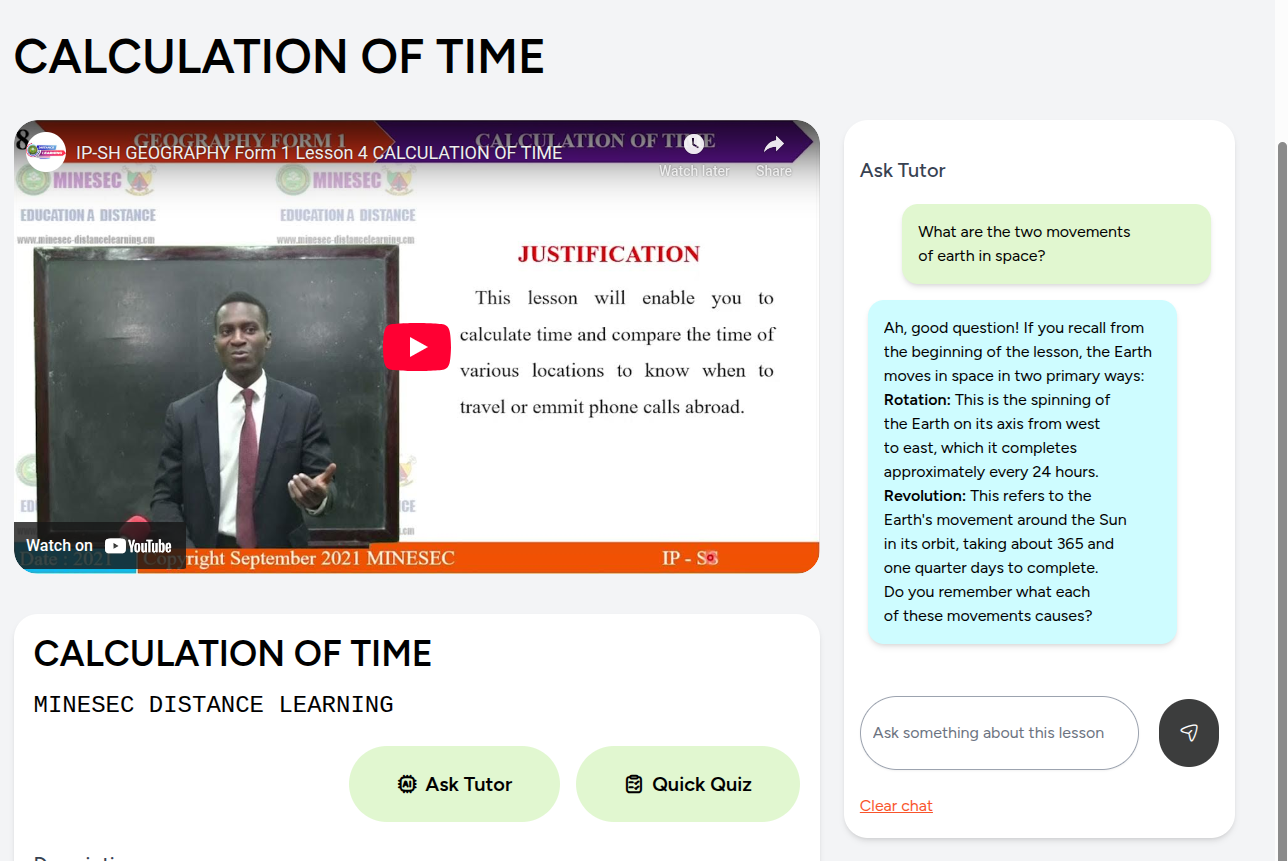
- How it works: If a student is watching a Biology video on Photosynthesis and gets confused, they can ask the AI, "Why is light necessary?"
- The Result: The AI provides an immediate, curriculum-aligned explanation without the student ever leaving the video player. This ensures no student is left behind due to a lack of support.
2. Formative Assessment Engines
Passive watching creates the "illusion of competence." To ensure mastery, NDAHI built a dynamic quiz engine.
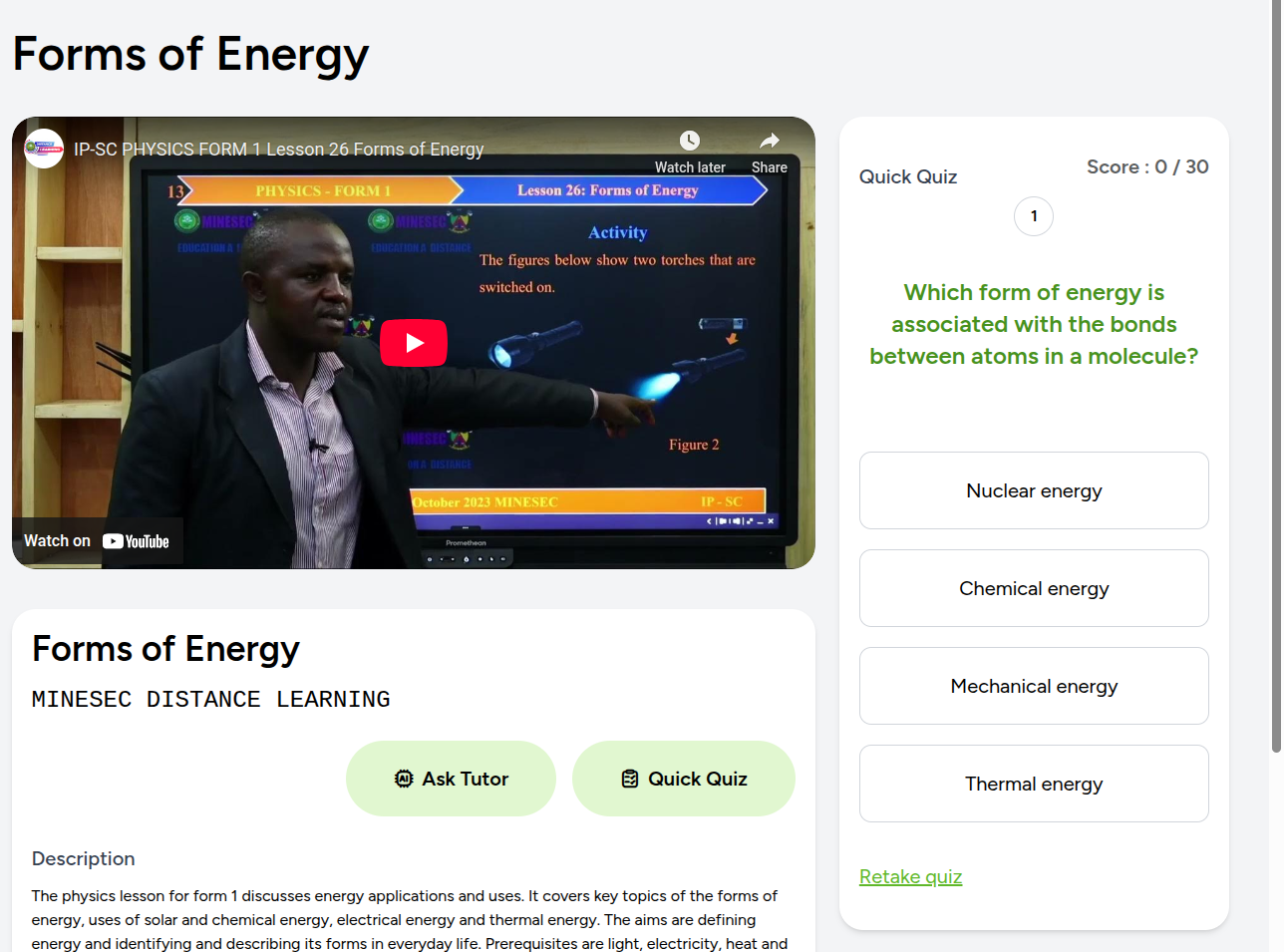
- Feature: At the end of every lesson, the AI system generates a Formative Quiz (MCQ).
- Impact: Students get instant feedback on their understanding, allowing them to self-diagnose gaps before they sit for high-stakes exams. We are able to track the student's progress in realtime and can recommend further videos to close knowledge-gaps after the quiz is completed.
3. Virtual Laboratories (PhET Integration)
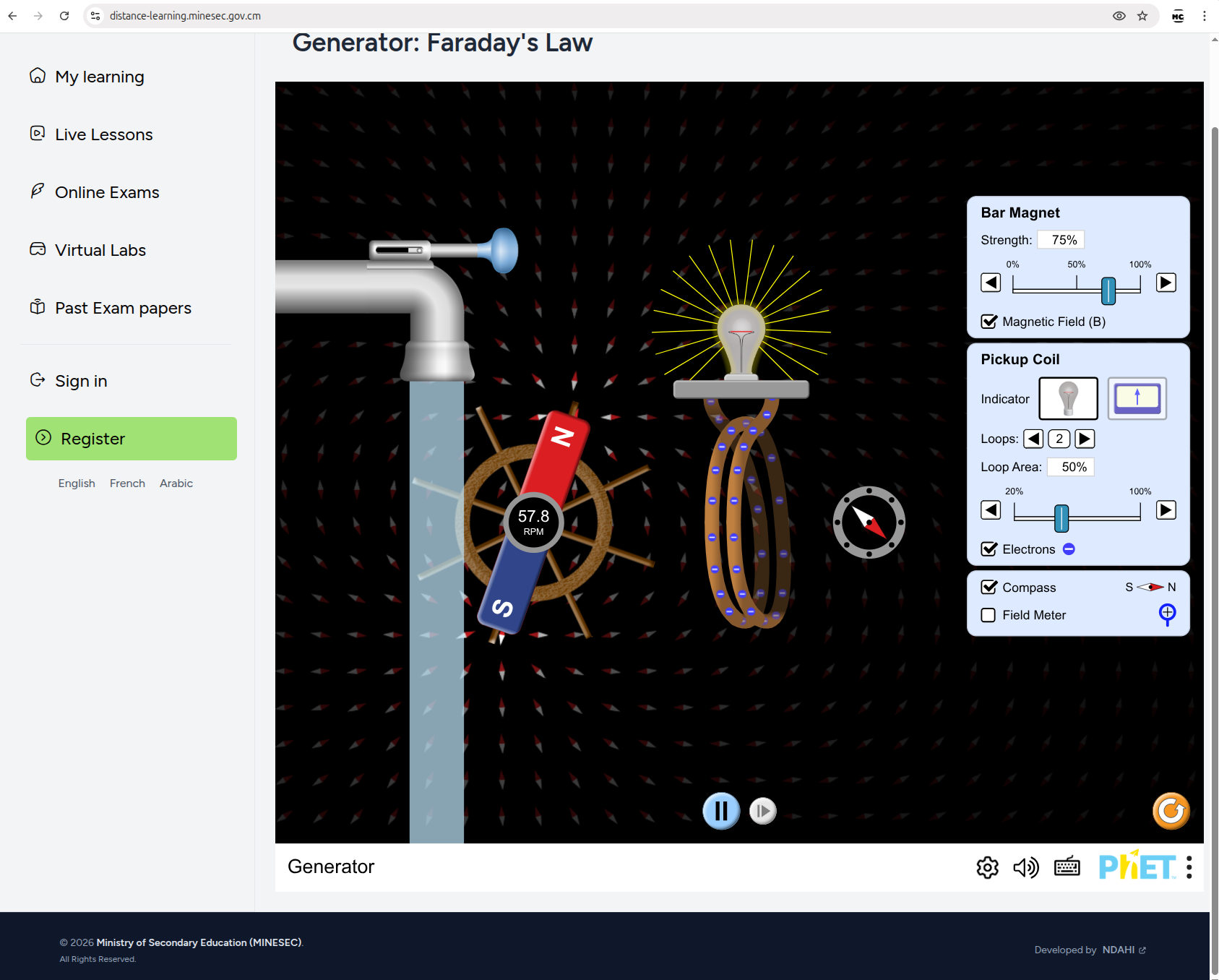 Science requires experimentation, but thousands of rural schools lack physical labs.
- The Fix: We embedded the entire PhET Interactive Simulation library directly into the platform.
- The Experience: A student in a remote village can now perform titration chemistry experiments or visualize circuit voltage drops on their phone, interacting with variables just as they would in a physical lab.
4. The National Exam Vault (GCE, DECC, OBC)
We digitized years of past question papers from the country's official examination boards. The platform now allows students to seamlessly switch from "Learning Mode" (concepts) to "Drill Mode" (exam prep), providing a data-driven path to success.
![AI Feature Screenshot Placeholder: Insert a screenshot of the AI Chat or a PhET simulation here]
The Impact: National Scale
Since the relaunch, the metrics have validated the approach:
- 17,000+ Monthly Active Users are now engaging with the platform.
- 80,000+ Subscribers across the ecosystem.
- Zero Downtime during peak exam revision periods.
As the Official Technical Partner, NDAHI is proud to have our engineering seal on the platform's footer, symbolizing a successful Public-Private Partnership that is reshaping Cameroonian education.
The Next Frontier: Taking the Cloud Offline
While 17,000 students are online, millions remain unconnected. The digital divide is the single biggest threat to educational equity.
This is NDAHI’s next mission.
We are currently piloting our Solar Offline Hubs initiative. By taking this exact software ecosystem—AI Tutors, Virtual Labs, and Exam Banks—and loading it onto solar-powered local servers, we are bringing the "Distance Learning" experience to villages without internet or electricity.
The Ministry platform proved we can build world-class software. The Solar Hubs will prove we can deliver it to the last mile.